juan365 com app Probability in Casino Games
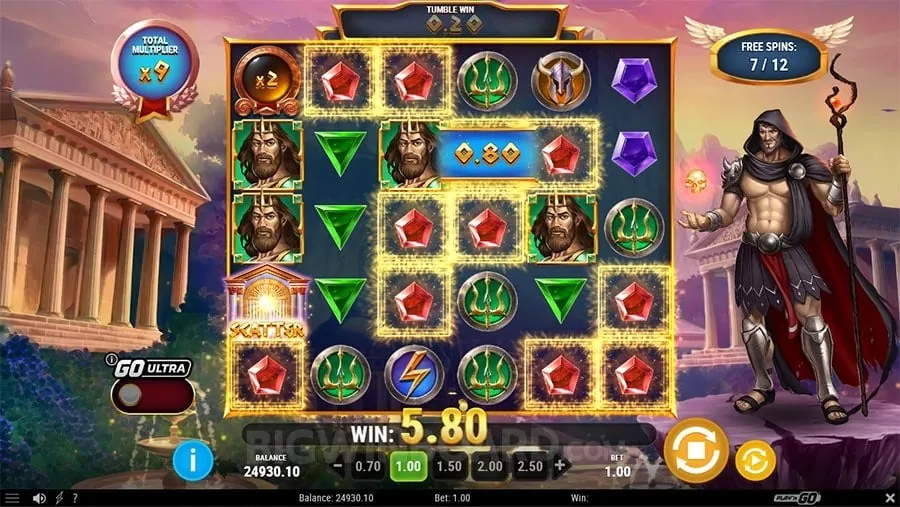
juan365 com app Probability in Casino Games
Welcome to the exciting world of online casino gaming, especially designed for the vibrant Philippines market! If you're new to this thrilling arena, understanding the concept of probability is your first step towards becoming a more informed and strategic player. The juan365 com app is your ultimate companion, offering a seamless and engaging experience with its cutting-edge Mobile-first design, ensuring you can enjoy your favorite games anytime, anywhere. This beginner's guide will demystify the probabilities behind popular casino games, equipping you with the foundational knowledge to navigate the virtual tables and slots with greater confidence. From understanding the house edge to recognizing the Return to Player (RTP) percentages, we'll cover essential concepts that empower you to make smarter choices. Get ready to explore the mathematical backbone of your favorite games and enhance your online casino adventure with juan365 com app!
Table of Contents
- Understanding Probability: The Core of Casino Games
- The House Edge Explained: Why Casinos Always Win (Eventually)
- Probability in Popular Casino Games: What Beginners Need to Know
- Smart Strategies for Beginners: Maximizing Your Chances
- Choosing Your Online Casino App: Key Considerations for Filipinos
- Frequently Asked Questions
Understanding Probability: The Core of Casino Games
At its heart, gambling is a game of chance, and probability is the mathematical framework that quantifies these chances. Simply put, probability is the likelihood of a specific event occurring. In casino games, this translates to the chances of you hitting a jackpot, drawing a winning card, or seeing the ball land on your chosen number. Understanding this isn't about predicting the future, but rather about comprehending the long-term statistical outcomes.
Every spin of a slot machine, every dealt card in blackjack, and every roll of the dice in craps is governed by probability. For instance, if you flip a coin, the probability of it landing on heads is 1/2 or 50%. Casino games are more complex, but the underlying principle remains the same. Game outcomes are often determined by Random Number Generators (RNGs) – sophisticated algorithms that ensure fairness and unpredictability. This means each spin or hand is independent of the last, a crucial concept for beginners to grasp.
Key terms you'll encounter include Return to Player (RTP) and House Edge. RTP is the percentage of all wagered money that a slot machine or casino game will pay back to players over time. For example, a slot with 96% RTP means that for every ₱100 wagered, the game is expected to return ₱96 to players over millions of spins. The remaining 4% is the house edge. Leading Casino game providers like JDB Gaming, JILI Games, and Play’n GO transparently publish their RTPs, allowing players on the juan365 com app to make informed choices. By understanding these basic probabilities, you're not just playing; you're playing smarter.
The House Edge Explained: Why Casinos Always Win (Eventually)
The house edge is perhaps the most fundamental concept in understanding casino game probability. It's the built-in advantage that the casino has over the player, expressed as a percentage of the player's initial bet. This edge ensures that, over the long run, the casino will always make a profit. It's not about cheating; it's simply how the business model works.
Let's look at some examples:
- European Roulette: Has a single zero (0). If you bet on red or black, there are 18 red, 18 black, and 1 green (0) pockets. Your chance of winning is 18/37. The payout is 1:1, but the true odds are slightly worse than that, creating a house edge of approximately 2.70%.
- American Roulette: Has both a single zero (0) and a double zero (00). This increases the house edge significantly to around 5.26% because the number of possible outcomes increases to 38, while payouts remain the same.
- Blackjack: With optimal strategy, the house edge can be as low as 0.5% to 1%. However, if you play without strategy, it can soar much higher.
- Slot Machines: The house edge is the inverse of the RTP. If a slot has an RTP of 96%, the house edge is 4%.
It's crucial to understand that the house edge doesn't mean you can't win in the short term. Many players experience thrilling wins, and that's part of the excitement. However, the longer you play, the more the house edge asserts itself, gradually grinding down your bankroll. This is why responsible gaming is paramount. The juan365 com app encourages players in the Philippines market to be aware of these dynamics and to set limits for themselves. Knowing the house edge helps you choose games wisely and manage your expectations.
Probability in Popular Casino Games: What Beginners Need to Know
Different casino games have different probabilities and house edges. Understanding these variations can significantly impact your gaming experience on the Online casino app like juan365 com app. Let's delve into some popular choices:
Slot Machines
Slots are arguably the most popular casino game, thanks to their simplicity and the potential for massive payouts. The probability in slots is entirely governed by the Random Number Generator (RNG). Each spin is an independent event, meaning past results do not influence future ones. The key metric here is the RTP (Return to Player) percentage. Casino game providers like JILI Games, PS (PS Gaming), and Wolf Gaming offer a vast array of slots with varying RTPs, typically ranging from 92% to 98%. A higher RTP means better long-term odds for the player. The Mobile-first design of juan365 com app makes these games incredibly accessible and visually appealing on your smartphone.
Blackjack
Blackjack is unique because it combines chance with a degree of skill. The goal is to get a hand value as close to 21 as possible without going over, and to beat the dealer's hand. Probability comes into play with every card dealt. Knowing the probabilities of busting (going over 21) with certain hands, or the likelihood of the dealer having a specific card, forms the basis of